How often should air ducts be cleaned? Tennessee homeowners ask this question constantly. Some companies say every year. Others say every three to five years. A few say never unless there is a problem. The honest answer depends on your specific home and household — not a one-size-fits-all schedule.
At Advanced Cleaning Service, we have cleaned air ducts across the Upper Cumberland since 1986. In this guide, we give you the straight answer. We base it on real factors that affect real Tennessee homes — not a schedule designed to sell you extra services.
What the Industry Guidelines Say About Duct Cleaning Frequency
The National Air Duct Cleaners Association recommends cleaning every three to five years for most homes. However, they also state that certain conditions require more frequent cleaning.
The EPA takes a similar position. Their indoor air quality guidance does not recommend a fixed annual schedule for every home. Instead, they recommend cleaning when there is visible contamination, pest activity, or unexplained health symptoms in occupants.
The key point is simple. Frequency should match your household conditions — not a calendar. However, Tennessee homes face specific regional challenges. These challenges push the recommended frequency toward the more frequent end of the range. Here is why.
Why Tennessee Homes Need More Frequent Duct Cleaning
Tennessee’s climate creates conditions that accelerate duct contamination. Several regional factors make this state harder on HVAC systems than many others.
High Humidity
Tennessee experiences high humidity for much of the year. Humidity that enters your HVAC system creates ideal conditions for mold and mildew inside ductwork. Additionally, condensation can form when warm humid air contacts cooler duct surfaces. Moisture inside ducts speeds up contamination significantly.
Heavy Pollen Seasons
Tennessee consistently ranks among the highest states for pollen counts. The warm climate supports tree pollen in spring, grass pollen in summer, and weed pollen into fall. Pollen particles enter your HVAC system through return vents. They accumulate in ductwork and get redistributed throughout your home every time the system runs.
Pet Dander Buildup
Pet dander is one of the biggest contributors to duct contamination. Dander particles are small and lightweight. They become airborne easily and get pulled into return air ducts efficiently. Homes with multiple pets or heavy-shedding breeds build up contamination faster than the general baseline assumes.
Older Homes
A large portion of Tennessee’s housing stock is several decades old. Older duct systems may have never been professionally cleaned. If you have moved into an older home without knowing the duct cleaning history, start with a professional inspection immediately — regardless of timing.
How Often Should Air Ducts Be Cleaned: By Household Type
Here is a practical breakdown based on your specific home conditions.
Every 2 to 3 Years — Standard Tennessee Home
A typical Tennessee home without pets and no severe respiratory conditions needs cleaning every two to three years. This is more frequent than the national baseline. Tennessee’s humidity and pollen levels justify the shorter interval.
Every 1 to 2 Years — Homes With Pets
Homes with one or more pets need annual or biennial cleaning. Pet dander and hair accumulate in ducts much faster than dust alone. Our professional duct cleaning service removes these contaminants completely and thoroughly.
Every 1 to 2 Years — Allergy and Asthma Sufferers
More frequent cleaning directly reduces airborne triggers for sensitive household members. Annual cleaning is a worthwhile investment for households where someone suffers from allergies or asthma. Read more here: How Air Duct Cleaning Improves Indoor Air Quality in Your Home
After Every Renovation Project
Construction generates enormous volumes of fine dust. Drywall dust, wood dust, and insulation fibers enter your HVAC system quickly. Therefore, clean your ducts after any significant renovation — regardless of your last cleaning date.
After Any Water Damage Event
Water damage near your HVAC system can introduce mold spores into ductwork. Once mold establishes itself inside ducts, it spreads throughout your home every time the system runs. Duct cleaning after water damage is a critical step many homeowners miss. Read more: What to Do Immediately After Water Damage in Your Home
Warning Signs Your Air Ducts Need Cleaning Right Now
These signs mean your ducts need attention immediately — regardless of your last cleaning date.
Dust at Supply Vents
Visible dust around supply registers is a clear warning sign. It means contamination levels inside the ductwork are already significant. Do not wait for your next scheduled cleaning if you see this.
Musty Odor When the System Runs
A musty smell from your vents indicates biological growth inside the duct system. This requires immediate professional attention. Read more about what this means: What Your Air Ducts Aren’t Telling You (And Why It Matters)
Rapid Dust Buildup Throughout the Home
If surfaces collect dust faster than usual — especially after the HVAC runs — contaminated ductwork is likely the cause. The system distributes accumulated debris into every room.
Worsening Allergy or Respiratory Symptoms
Increased sneezing, coughing, or eye irritation that improves when occupants leave the home is a strong indicator of indoor air quality issues. Contaminated ductwork is a common contributing factor.
Evidence of Pest Activity Near HVAC Components
Rodents or insects that access duct systems leave behind droppings and biological material. This contaminates the entire duct network. Professional cleaning is necessary after any pest activity near your HVAC system.
Visible Mold Near HVAC Components
Any visible mold at register openings or on air handler components requires immediate professional inspection. Mold in an HVAC system is a serious air quality issue that needs targeted treatment — not just standard cleaning.
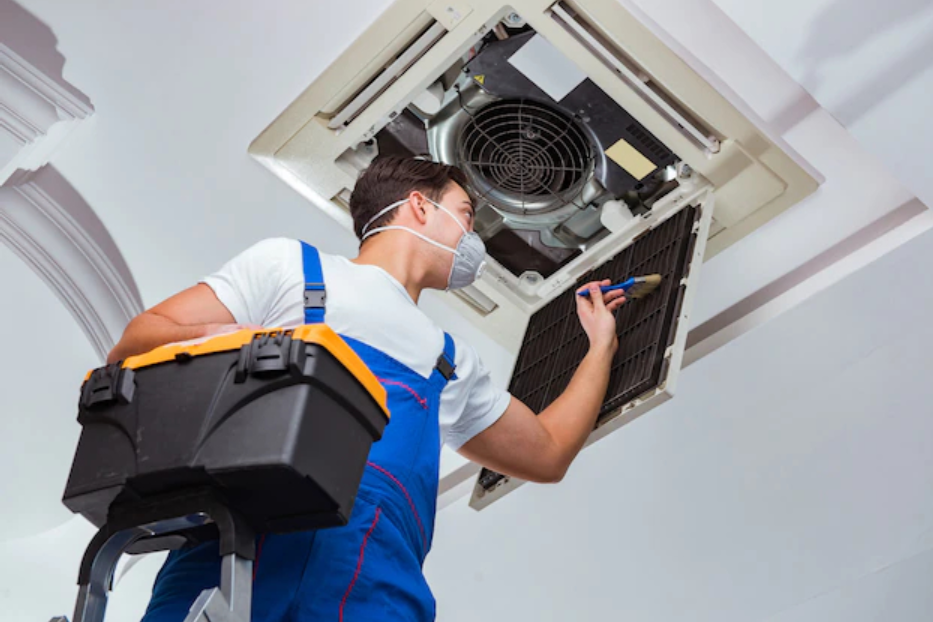
What Professional Duct Cleaning Actually Involves
Many homeowners do not know what thorough duct cleaning looks like. Here is what a complete professional service includes.
Inspection Before Cleaning
A technician inspects the duct system before starting. They assess contamination levels and identify concerns like mold or pest activity. Skipping this step is a red flag about any company’s process.
Negative Pressure Creation
Professional cleaning uses powerful vacuum equipment to create negative pressure inside the duct system. This contains loosened debris. It prevents contamination from spreading into living areas during the cleaning process.
Mechanical Agitation
Brushes and air whips dislodge debris that sticks to duct surfaces. Vacuuming alone leaves significant contamination behind. Mechanical agitation is what separates thorough professional cleaning from superficial service.
Complete System Coverage
A complete cleaning covers supply ducts, return ducts, registers, grilles, air handler components, drain pans, and the blower. Cleaning only accessible duct runs without addressing the full system leaves contamination sources in place.
Post-Cleaning Inspection
After cleaning, the technician re-inspects the system. They verify that contamination is adequately addressed. They also check for any new issues uncovered during the cleaning process.
At Advanced Cleaning Service, our duct cleaning service follows this complete process on every job.
How to Extend the Time Between Cleanings
Professional duct cleaning is only part of maintaining good indoor air quality. These habits keep your system cleaner between professional services.
Change your air filter on schedule. Check your filter monthly. Change it every one to three months depending on household conditions. A clogged filter allows more particulates to bypass it and enter the ducts.
Keep return air vents clear. Furniture or curtains placed over return vents restrict airflow. They increase the concentration of contaminants pulled into the system from a smaller area.
Address moisture issues promptly. Any moisture source near your HVAC system needs immediate attention. Moisture is the primary driver of biological contamination in ducts.
Schedule regular carpet cleaning. Carpets hold the same dust, dander, and allergens that contaminate ducts. Regular professional carpet cleaning reduces airborne particulates available to enter your HVAC system.
Serving the Upper Cumberland With Professional Duct Cleaning
At Advanced Cleaning Service, we provide professional duct cleaning across the Upper Cumberland. We serve Cookeville, Crossville, Sparta, Baxter, Livingston, Monterey, Fairfield Glade, Lake Tansi, and Rickman. Since 1986, Tennessee families have trusted us to deliver thorough and honest service.
Frequently Asked Questions About Air Duct Cleaning Frequency
Q: How often should air ducts be cleaned in a home with no pets? For a typical Tennessee home without pets, clean every two to three years. Tennessee’s humidity and pollen levels make this more frequent than the national baseline of three to five years.
Q: Does duct cleaning really make a difference in air quality? Yes — when a qualified professional performs it thoroughly. Studies show professional duct cleaning reduces airborne particulates in homes with contaminated systems. The improvement is most noticeable for allergy sufferers and homes with pets.
Q: How do I know if my ducts have never been cleaned? Get a professional inspection if you do not have documentation. Signs of never-cleaned ducts include heavy dust at registers, strong odors when the system runs, and reduced airflow from supply vents.
Q: Is annual duct cleaning too frequent? For most homes, yes. However, homes with multiple pets, severe allergy sufferers, or documented mold issues justify annual cleaning. Be cautious of companies recommending annual cleaning for every customer regardless of conditions.
Q: Can I clean my own air ducts? Homeowners can clean surfaces at register openings and change filters regularly. However, thorough duct cleaning requires professional equipment and system access. DIY cleaning addresses only a small fraction of total contamination.
More Questions About Duct Cleaning in Tennessee
Q: How long does professional duct cleaning take? For a typical Tennessee home, professional duct cleaning takes two to four hours. A thorough cleaning should never finish in under an hour. A very short quoted service time is a red flag about completeness.
Q: Does duct cleaning help with pet odors? Yes. Pet dander and odor compounds accumulate in ducts and recirculate throughout the home. Professional duct cleaning removes accumulated dander effectively. Combining duct cleaning with professional carpet cleaning delivers the most comprehensive results for pet odor problems.
Q: What is the best time of year to clean ducts in Tennessee? Late fall or early winter is ideal — before the heating season begins. This removes accumulated summer pollen, dust, and humidity-related contamination. Spring is the second best option after peak pollen season ends.
Ready to Schedule Your Professional Duct Cleaning?
At Advanced Cleaning Service, we give you an honest assessment of your duct system. We recommend cleaning based on your specific home — not a fixed schedule designed to maximize service calls. No unnecessary upsells. Just honest advice and thorough service from a team that has served the Upper Cumberland since 1986.