

Learning how to remove oil stains from concrete is one of those jobs every homeowner faces eventually. A car drips in the driveway, a mower leaks in the garage, or a grill spits grease on the patio, and a dark spot appears that plain water will not touch. The stain looks permanent. However, in most cases it is not.
This guide walks through the methods that actually work, from fresh drips you catch the same day to black stains that have been there for years. It also covers the products worth buying, the ones that waste money, the mistakes that damage concrete, and the point where professional pressure washing makes more sense than another weekend of scrubbing. Advanced Cleaning Service has cleaned driveways, garage floors, and sidewalks across the Upper Cumberland since 1986, and every method below is one we have seen succeed.
Why Oil Stains Sink Into Concrete
Concrete looks solid, but it is full of tiny pores and capillaries. Oil is thin, and it wicks into those pores the same way water soaks into a sponge. Once it is inside, surface cleaning only reaches the top layer. That is why a stain often looks lighter after scrubbing and then darkens again as oil rises back up over the next few days.
In addition, heat makes it worse. A Tennessee driveway in July can top 140 degrees, which thins the oil and drives it deeper. As a result, a stain that stays near the surface in March can be half an inch down by August.
Similarly, age matters. Fresh oil sits in the top few millimeters and comes out easily. Oil that has been there for months has oxidized into a sticky, tar like residue that needs a solvent or a microbial cleaner to break down. Meanwhile, sealed concrete resists penetration and cleans quickly. Unsealed concrete, which describes most driveways in Cookeville and Crossville, absorbs everything.
What You Need to Remove Oil Stains From Concrete
You will not need everything on this list. Instead, pick the items that match the age of your stain.
For fresh spills, keep clay cat litter, baking soda, or sawdust on hand, plus a stiff nylon deck brush and dish soap. For older stains, add a concrete degreaser, powdered laundry detergent, acetone for a poultice, and a microbial or enzyme based concrete cleaner. Also, wear gloves and eye protection when working with degreasers or solvents.
Use a nylon brush rather than a wire brush. Wire bristles scratch the surface and leave a rough patch that collects dirt and looks worse than the original stain. A garden hose handles rinsing, and a pressure washer is optional for the final step.
How to Remove Oil Stains From Concrete: Fresh Spills
Speed is everything with a fresh spill. Handled within a day, most fresh oil stains disappear completely.
Step 1: Absorb it. Pour clay cat litter over the entire spill in a thick layer. Grind it into the stain with the sole of an old shoe so the clay makes full contact with the concrete. Then leave it for at least 30 minutes, or overnight for a large spill. Afterwards, sweep it up and dispose of it in a sealed bag.
Step 2: Scrub with dish soap. Squirt grease cutting dish soap directly on the stain, add a splash of hot water, and scrub hard with the nylon brush for two to three minutes. Because dish soap is designed to break down grease, it often finishes the job alone on fresh oil.
Step 3: Rinse and check. Rinse with the hose and let the concrete dry. Because wet concrete hides stains, wait until the surface is fully dry before judging. If a shadow remains, then repeat the scrub.
How to Remove Old Oil Stains From Concrete
Old, dark stains need one of three stronger approaches. Start with the first, then move down the list if the stain is stubborn.
Method 1: Concrete degreaser. Buy a product labeled for concrete or driveways, not an all purpose spray. Apply it full strength to the dry stain, let it dwell for the time on the label, usually 10 to 15 minutes, and scrub with the nylon brush. Rinse with hot water if you have it. For example, a stain that is a few months old usually needs two or three rounds.
Method 2: Poultice. A poultice pulls oil up and out of the pores instead of pushing it around. Mix baking soda or powdered cat litter with enough acetone to form a thick paste. Spread it a quarter inch thick over the stain, cover it with plastic sheeting, tape the edges, and leave it for 24 hours. As the solvent dries, it draws the oil into the powder. Afterwards, scrape it up, rinse, and repeat once if needed.
Method 3: Microbial cleaner. These products contain bacteria that eat petroleum. They are slow. However, they reach oil that solvents cannot. Apply, keep the area damp and shaded, and give it one to two weeks. For a stain that has been there for years, this is often the only method that removes it completely.
Pressure Washing Oil Stains From Concrete
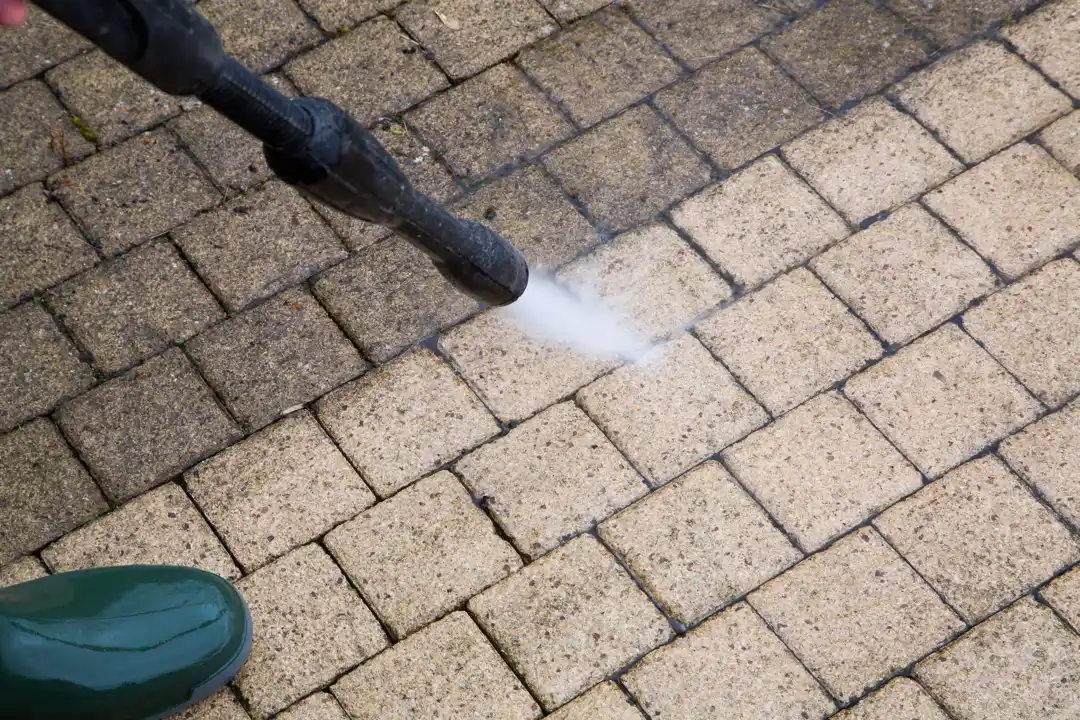
Pressure washing alone rarely removes oil. High pressure water blasts dirt off the surface, yet it does not dissolve grease, and it can push oil deeper into the pores. Instead, the trick is to combine pressure with chemistry.
Apply degreaser first and let it dwell. Then wash at 2,500 to 3,000 PSI with a 25 degree tip, holding the wand 8 to 12 inches from the surface and keeping it moving. Stopping in one place etches the concrete and leaves permanent lines. In addition, hot water units, which most professionals use, dramatically outperform the cold water machines sold at hardware stores because heat keeps the oil liquid long enough to rinse it away.
Once the stain is gone, wash the entire driveway or slab, not just the spot. Otherwise, cleaning one area leaves a bright patch surrounded by dingy concrete. Our post on power washing versus pressure washing explains why the hot water difference matters so much on concrete.
What Not to Use on Oil Stained Concrete
Several common suggestions cause more harm than good.
Bleach does nothing to oil. Instead, it lightens the surrounding concrete and makes the stain stand out more.
Muriatic acid etches concrete and creates a rough, pitted texture that traps future stains. It also produces dangerous fumes and must never touch pavers or decorative finishes.
Wire brushes and grinders scar the surface. Then the scar collects dirt and never blends back in.
Mixed chemicals are the most dangerous mistake. Degreasers, bleach, ammonia, and acids react badly with each other. Our guide to household chemicals that should never be mixed covers the combinations that send people to the emergency room.
Finally, keep runoff out of storm drains. Oily rinse water belongs on the lawn or in a bucket, not in the street, and Tennessee municipalities can fine homeowners for discharging petroleum into stormwater systems.
Garage Floors, Driveways, and Patios
The surface changes the approach slightly.
Because garage floors are usually smoother and often sealed, degreaser and a scrub brush handle most stains. Open the door and ventilate before using acetone or solvent based products indoors.
Driveways take the most abuse because they are rough, unsealed, and baked by sun, so oil goes deep. As a result, expect to use the poultice or microbial method on anything older than a few weeks. Spring is the ideal time to tackle a driveway, and our post on what to power wash in spring explains how to fit it into a full exterior cleanup.
Patios and pavers need gentle handling. First, skip acids entirely. Then keep pressure below 2,000 PSI so you do not blow out the sand between pavers, and use a degreaser rated for masonry.
How to Prevent Oil Stains on Concrete
Prevention costs far less than removal. Seal your driveway and garage floor with a penetrating concrete sealer every two to three years. Once sealed, concrete holds oil on the surface, where cat litter and dish soap remove it in minutes.
Put a drip pan or a piece of cardboard under any vehicle that leaks, and get the leak fixed. Also, park the mower and pressure washer on a rubber mat. Finally, keep a bag of cat litter in the garage so you can cover a spill the moment it happens.
The Portland Cement Association notes that properly sealed concrete resists staining and lasts longer, which makes sealing the single best investment for a driveway you want to keep looking new.
When to Call a Professional
Home methods work well on individual stains. However, call for help in these situations.
The stain is more than a year old and two rounds of degreaser have not touched it. Oil covers a large area, such as a whole parking pad or a commercial lot. You are listing the house and want the driveway uniformly clean for photos. Or you do not own a pressure washer and would rather not rent one for a single job.
Our power washing service uses hot water equipment, commercial degreasers, and surface cleaners that wash an entire driveway evenly with no stripes or bright spots. For siding, roofs, and other surfaces that cannot take high pressure, we switch to the low pressure method described in our complete guide to soft washing a Tennessee home exterior, so the whole property gets cleaned in a single visit.
Frequently Asked Questions About How to Remove Oil Stains From Concrete
Does vinegar remove oil stains from concrete?
Not well. Vinegar is a mild acid and does not break down petroleum. Instead, dish soap, a concrete degreaser, or a poultice will outperform it every time.
Will pressure washing remove oil stains from concrete?
Only when combined with a degreaser and, ideally, hot water. Pressure alone moves dirt yet leaves oil in the pores, and it can even drive the stain deeper.
How do you remove old oil stains from concrete?
Use a poultice of baking soda and acetone left under plastic for 24 hours, or a microbial cleaner that digests the oil over one to two weeks. Then follow either with a degreaser scrub and a full rinse.
What is the best concrete oil stain remover?
For fresh stains, clay cat litter followed by dish soap works best. Stains a few months old respond to a dedicated concrete degreaser. Anything a year or older usually needs a microbial cleaner. No single product handles all three.
Can I use Dawn dish soap on concrete oil stains?
Yes, and it is the best first step on fresh oil. Apply it straight, scrub with a stiff nylon brush and hot water, and rinse. However, it struggles with old oxidized stains, which need a degreaser or poultice.
How long does it take to remove an oil stain from concrete?
Fresh spills take under an hour. Degreaser methods, meanwhile, take an afternoon with repeat rounds. A poultice needs 24 hours, and microbial cleaners need one to two weeks. In comparison, professional hot water pressure washing handles most stains in a single visit.
Want the Whole Driveway Clean, Not Just the Spot?
Removing one oil stain is a good Saturday project. Getting the entire driveway, garage floor, and walkway back to an even, clean finish is what Advanced Cleaning Service has done for Upper Cumberland homeowners since 1986, backed by our 100% Service Guarantee.
Contact us for a free quote or call 800-773-7769, and we will take care of the oil, the grime, and the mildew in one visit.
